 Benny Morgan
 Karla Spencer
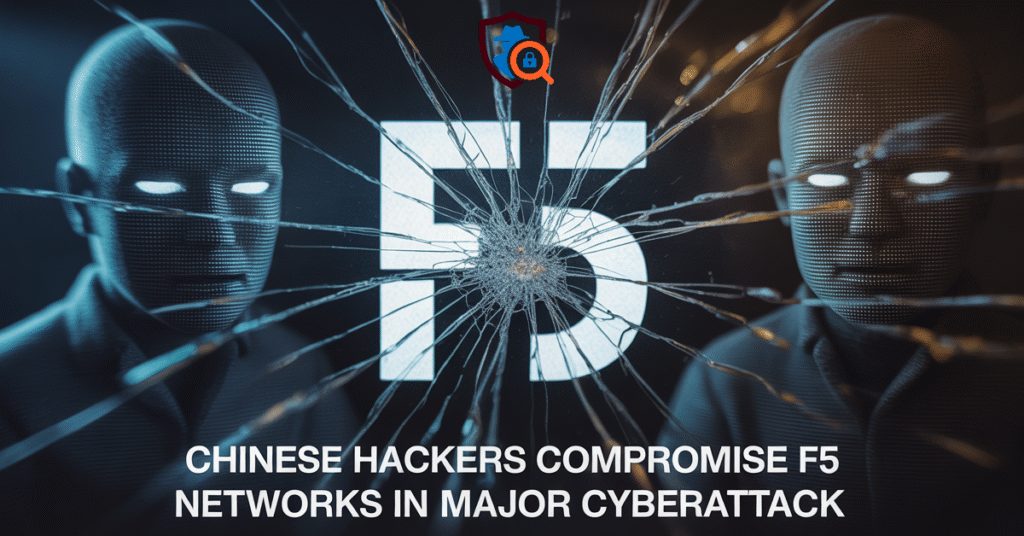
Key Takeaway: F5 Security Breach – Chinese state-sponsored hackers stole F5’s BIG-IP source code and vulnerability data, threatening Fortune 500 companies and federal networks.
Major Cybersecurity Incident Exposes Critical Infrastructure
F5 Networks, a Seattle-based cybersecurity giant that protects 85% of Fortune 500 companies, disclosed on Wednesday that sophisticated nation-state hackers had maintained “long-term, persistent access” to its internal systems for at least 12 months. The breach, discovered on August 9, 2025, represents one of the most significant supply chain security incidents in recent years, potentially affecting thousands of organizations worldwide.
The attackers successfully infiltrated F5’s BIG-IP product development environment and engineering knowledge management platforms, stealing sensitive source code and information about undisclosed security vulnerabilities. BIG-IP products serve as critical infrastructure components, handling traffic management, load balancing, and security functions for major banks, technology companies, and government agencies.
According to multiple sources familiar with the matter, F5 representatives have informed customers that Chinese state-sponsored hackers were responsible for the intrusion. The company’s CEO, François Locoh-Donou, is personally briefing customers about the timeline and Chinese involvement.
Government Issues Emergency Response
The U.S. Cybersecurity and Infrastructure Security Agency (CISA) responded with unprecedented urgency, issuing Emergency Directive 26-01 on Wednesday. The directive orders all federal civilian agencies to patch their F5 systems by October 22, citing an “imminent threat” to federal networks.
“The alarming ease with which these vulnerabilities can be exploited by malicious actors demands immediate and decisive action from all federal agencies,” stated CISA Acting Director Madhu Gottumukkala. “These same risks extend to any organization using this technology, potentially leading to a catastrophic compromise of critical information systems”.
Nick Andersen, CISA’s executive assistant director for cybersecurity, confirmed that “thousands of instances of F5 product types” exist within federal agencies. However, he noted that no federal agencies are currently known to have been compromised.
The U.K.’s National Cyber Security Centre also issued warnings, stating that hackers could use their access to F5 systems to “enable a threat actor to exploit F5 devices and software”.
Impact of the F5 security breach
The stolen materials pose extraordinary risks to organizations worldwide. Hackers obtained portions of BIG-IP source code, undisclosed vulnerability information, and configuration details for some F5 customers. This combination provides attackers with what security experts describe as a “master key” to potentially exploit F5 infrastructure globally.
“Make no mistake, the breach at F5 is a five-alarm fire for national security,” said Bob Huber, chief security officer at Tenable and former U.S. Navy cyber leader. “The stolen data could be used as a master key to launch devastating attacks, similar to the campaigns waged by Salt Typhoon and Volt Typhoon”.
F5 serves over 1,000 corporate customers, including 48 of the Fortune 50 companies. The company’s technology is deployed across critical infrastructure, with all 15 U.S. presidential cabinet executive agencies using F5 products.
Latest Developments
F5 released emergency security updates on Wednesday for BIG-IP, F5OS, BIG-IP Next for Kubernetes, BIG-IQ, and APM clients. The company has engaged external cybersecurity experts including CrowdStrike, Mandiant, NCC Group, and IOActive to investigate the breach.
The company also provided customers with a threat hunting guide for Brickstorm malware, associated with the Chinese hacking group UNC5221. This group has been identified as “the most prevalent adversary in the United States over the past several years” by Mandiant researchers.
F5 stated that it has “not seen any new unauthorized activity” since beginning containment efforts and believes its response has been successful. The U.S. Department of Justice allowed F5 to delay public disclosure under national security exemptions.
About F5
F5 Networks, founded as “F5 Labs” in 1996, launched its first BIG-IP load balancer in 1997. The company went public in 1999 and has grown to become the market leader in application delivery solutions. F5’s name references the highest intensity tornado on the Fujita scale, reflecting its powerful technology impact.
The company has strategically expanded through numerous acquisitions, including MagniFire Websystems (2004), Swan Labs (2005), and Traffix Systems (2005), building its comprehensive application security portfolio. Most recently, F5 acquired MantisNet and Fletch in 2025 to enhance its AI-driven security capabilities.
F5 has received recognition as one of Fortune’s Most Admired Companies and maintains headquarters in Seattle’s F5 Tower, with 75 offices across 43 countries. The company serves the top 10 mobile service providers by revenue and maintains a 92% customer recommendation rate.
Other Related Post form securedetectives.com
- SpyX Review 2026: Does It Really Keep Kids Safe?
- uMobix vs Eyezy: Which is Best Parental Control Tool?
- Lloyds IT glitch exposes 447,936 customers’ data in banking wake‑up call
- What Is Anthropic’s Claude Code Security And How Does It Work?
- 5 Best Snapchat Monitoring Apps for Parents (2026)
Past References and Similar Events
Chinese state-sponsored groups have previously targeted F5 infrastructure. In 2023, CISA issued alerts about China-linked hackers exploiting F5 vulnerabilities, with Mandiant analysis confirming Chinese involvement. The cybersecurity company Sygnia also linked a suspected Chinese group called “Velvet Ant” to attacks targeting F5’s BIG-IP appliances over a three-year period.
The current incident involves the UNC5221 group, which has been active since 2023 and specializes in stealing source code from technology providers to identify vulnerabilities. This group previously exploited Ivanti Connect Secure VPN vulnerabilities and has maintained access to victim networks for extended periods, with average “dwell times” of 400 days.
The attack follows a pattern of major supply chain compromises, including the SolarWinds incident involving Russian hackers and multiple breaches at Microsoft by Chinese and Russian threat actors. Security experts note that the theft of both source code and vulnerability information represents an unprecedented level of access that could enable widespread exploitation.
The timing is particularly concerning as it occurs during a U.S. government shutdown, potentially hampering federal cybersecurity response capabilities while critical infrastructure faces elevated risks.
Sources: Information compiled from F5’s official security notification, TechCrunch reporting, CISA emergency directive documentation, Reuters coverage, and Bloomberg News investigation into the Chinese attribution.