 Benny Morgan
 Karla Spencer
Key Takeaway: UK Cyber-Attacks Jump 50% – Britain’s cyber defenses face their toughest test yet as attacks reach nine-year high, forcing government to issue urgent warnings to business leaders.
Record Breaking Year for Cyber Threats
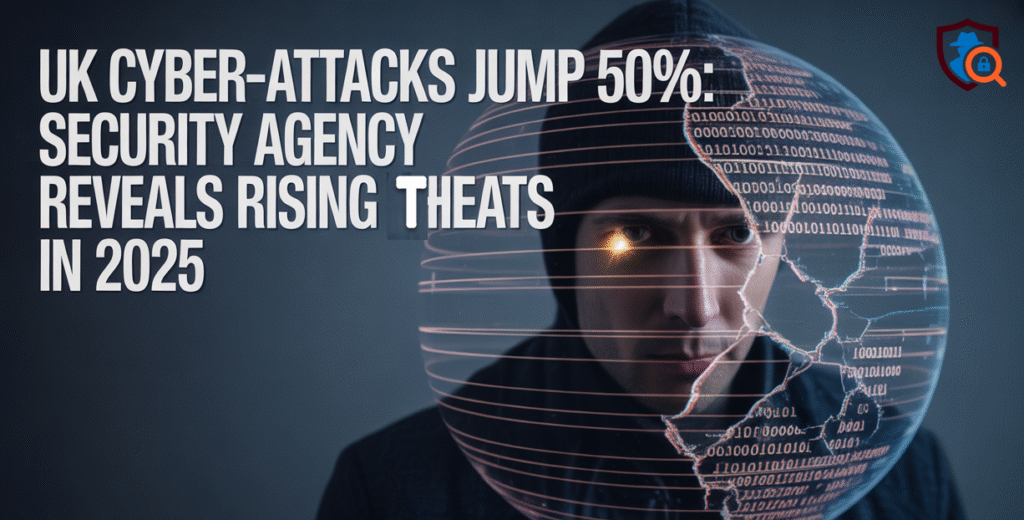
The United Kingdom is experiencing an unprecedented surge in cyber-attacks, with “highly significant” incidents jumping by 50% in the past year according to the National Cyber Security Centre’s (NCSC) latest annual review. The agency, which operates under intelligence service GCHQ, handled 429 cyber incidents in the 12 months to August 2025—with a staggering 204 classified as “nationally significant,” more than double the 89 recorded the previous year.
Most alarmingly, 18 attacks were rated “highly significant,” indicating potential to severely disrupt essential services or damage the national economy. This represents the highest level of cyber threat activity recorded by the NCSC in nine years, with attacks now occurring at approximately four nationally significant incidents per week.
Dr. Richard Horne, NCSC chief executive, delivered a stark warning: “With over half the incidents handled by the NCSC deemed to be nationally significant, and a 50% rise in highly significant attacks on last year, our collective exposure to serious impacts is growing at an alarming pace. The time to act is now”.
Major Retailers and Manufacturers Targeted
The cyber assault on Britain’s corporate landscape has left household names reeling. Marks & Spencer faced disruption over the Easter bank holiday weekend, while The Co-op suffered a breach affecting all 6.5 million members, with criminals stealing personal data including names, contact details, and dates of birth.
Perhaps most dramatically, Jaguar Land Rover was forced to halt all production following a ransomware attack, prompting the government to provide a £1.5 billion support package to stabilize the company’s supply chain. The attack ground production lines to a complete standstill, demonstrating how cyber threats now translate directly into empty shelves and economic disruption.
In one of the year’s most disturbing incidents, the Kido nursery chain fell victim to ransomware criminals who stole sensitive data on approximately 8,000 children under five. The attackers, calling themselves “Radiant,” accessed names, photographs, addresses, dates of birth, and safeguarding notes before posting sample profiles on the dark web and directly contacting parents demanding a £600,000 Bitcoin ransom.
The criminals escalated their extortion by telephoning parents directly, leading cybersecurity experts to condemn the attack as “an absolute new low” in cybercrime. Two 17-year-old suspects were subsequently arrested by Metropolitan Police in connection with the incident.
Government Mobilizes Emergency Response
Recognizing the scale of the threat, the UK government has written directly to CEOs and chairs of leading companies, including all FTSE 350 members. The ministerial letter, signed by business secretary Peter Kyle and technology secretary Liz Kendall, urges companies to treat cyber risk as a board-level responsibility and implement the NCSC’s free Cyber Action Toolkit and Cyber Essentials program.
The government is now advising businesses to prepare “pen and paper” backup plans to maintain operations during cyber-attacks, with NCSC recommending that contingency plans be stored offline as a precautionary measure.
New Legislative Measures on the Horizon
The government is pressing ahead with groundbreaking ransomware legislation following public consultation. The proposed measures include a targeted ban on ransomware payments for public sector bodies and critical national infrastructure operators, alongside mandatory incident reporting requirements.
Security Minister Dan Jarvis emphasized the government’s determination: “Ransomware is a predatory crime that puts the public at risk, wrecks livelihoods and threatens the services we depend on. That’s why we’re determined to smash the cyber criminal business model”.
State-Sponsored Attacks Intensify
The NCSC identifies China, Russia, Iran, and North Korea as the primary sources of state-backed cyber threats, with these nations increasingly deploying sophisticated ransomware and extortion tactics against British organizations. The rise in attacks has been largely driven by ransomware groups, many of which have built pipelines of juvenile talent to execute their operations.
Advanced Persistent Threat (APT) actors—either nation-state operatives or highly capable criminal groups—were linked to a substantial proportion of all incidents handled by the NCSC last year.
Rising Public Fear and Vulnerability
New research reveals that one in three UK adults have witnessed more hacking incidents this year than ever before, with official data suggesting cyber incidents now occur at approximately one per minute. Despite 56% of Britons admitting fear of being hacked, many remain unprepared, with one in five still dismissing cyber risks as “overexaggerated”.
The financial toll is substantial, with ransomware estimated to cost the UK economy millions of pounds annually. The attacks are increasingly targeting supply chains, with criminals recognizing that smaller businesses may be more vulnerable to losing orders and payments if their larger clients are incapacitated.
Conclusion: A Nation at a Crossroads
As Dr. Horne warned in the NCSC’s annual review launch, “Nobody wants to believe their business could grind to a halt following a cyber-attack, but any leader who fails to prepare for that scenario is jeopardising their business’s future”. With cyber-attacks now affecting not just computers and data, but “real business, real products, and real lives,” the UK faces a critical moment in its digital defense strategy.
The message from Britain’s cybersecurity leadership is unambiguous: in an era where hesitation equals vulnerability, the time for action is now.
Sources: National Cyber Security Centre, Reuters, BBC News, Computing, Infosecurity Magazine, UK Government Publications